
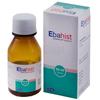
Aleva 10 mg
Generic: Ebastine
Category: Tablet
Manufacturer: Renata Limited

Allopathic
MFG. Licence No. Biological
045
MFG. Licence No. Non-Biological
197
Address
Plot No. 1, Sec-7, Milk Vita Road, Mirpur, Dhaka.
Price: 72.0 ৳
Strip

Medicine Selling service is not available yet.
Alternative Brands & Related Medicines


Indications
Aleva is indicated for the symptomatic treatment of:
Seasonal and Perennial Allergic Rhinitis.
Chronic Idiopathic Urticaria.
Therapeutic Class
Non-sedating antihistamines
Pharmacology
Ebastine, a piperidine derivative, is a long-acting, nonsedating, second-generation histamine receptor antagonist that binds preferentially to peripheral H1 receptors. It is metabolised to active metabolite, carebastine. It has antihistaminic, antiallergic activity and prevents histamine-induced bronchoconstriction. It does not have significant sedative or antimuscarinic actions.
Interaction
Ebastine in combination with either ketoconazole or erythromycin increases in plasma level of ebastine and prolonged QTc interval. Ebastine does not interact with the pharmacokinetics of theophylline, warfarin, cimetidine, diazepam or alcohol. The sedation effect of alcohol and diazepam may be enhanced.
Contraindications
Patients with a known hypersensitivity to Ebastine or any of its ingredients.
Side Effects
The most common side-effects are headache, dry mouth and drowsiness. Less commonly reported side effects include abdominal pain, dyspepsia, nausea and insomnia.
Pregnancy And Lactation
The safety of Ebastine during pregnancy and lactation has not been established.
Precautions And Warnings
It is advisable to exercise caution when using ebastine in patients known to have the following conditions: long QT syndrome, hypokalaemia, treatment with any medicine known to produce an increase in QT interval or inhibit CYP3A4 enzyme systems such as azole antifungals and macrolide antibiotics. Use in Pregnancy and Lactation The safety of ebastine during pregnancy and lactation has not been established. Ebastine should not be used during pregnancy only if clearly needed. It is not known whether ebastine is excreted in milk, therefore, ebastine should not be used during lactation.
Overdose Effects
No clinically meaningful signs or symptoms were observed up to 100 mg given once daily. There is no specific antidote for Ebastine. In case of accidental overdoses, gastric lavage, monitoring of vital functions including ECG and symptomatic treatment should be carried out.
Storage Conditions
Store below 30°C at a cool and dry place, away from light. Keep out of reach of children
Drug Classes
Non-sedating antihistamines
Mode of Action
Ebastine is a long-acting and selective H1-histamine receptor antagonist. After repeated administration, inhibition of peripheral receptors remains at a constant level. Ebastine is rapidly absorbed and undergoes extensive first-pass metabolism following oral administration. Ebastine is almost totally converted to the pharmacologically active acid metabolite, carebastine.

Samm Care